
TL;DR: - The rise of voice recognition technology is transforming the way users interact with websites. For individuals with disabilities, voice-enabled interfaces provide a more accessible, hands-free way to navigate digital content. From voice assistants to speech-to-text tools, this technology is breaking down barriers and creating a more inclusive web experience.
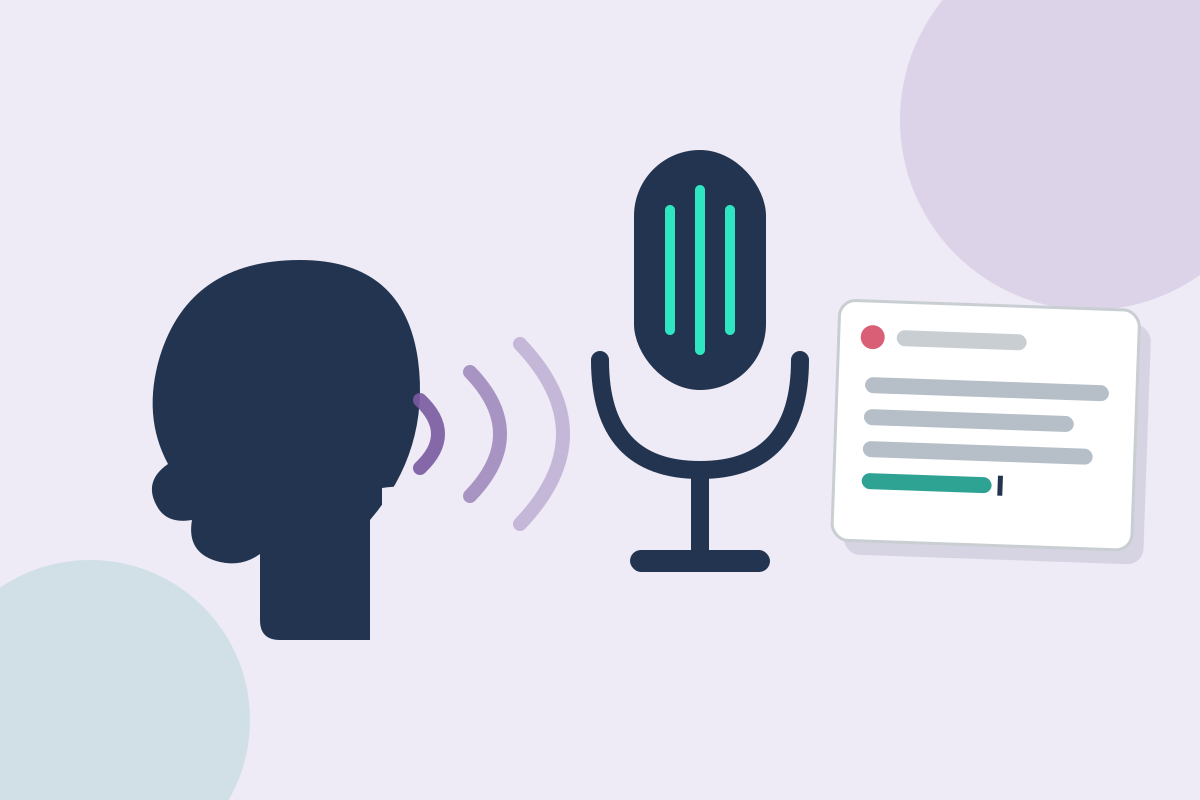
Understanding Voice Recognition and Web Accessibility
Voice recognition technology converts spoken language into digital commands, allowing users to interact with devices and applications without relying on traditional input methods like keyboards and mice. This is particularly beneficial for individuals with mobility impairments, visual impairments, and cognitive disabilities.Key Benefits of Voice Recognition for Accessibility
- Hands-Free Navigation
For users with limited mobility, voice commands eliminate the need for precise hand movements, making it easier to browse the web, fill out forms, and interact with content.
Example: Virtual assistants like our AI widget assistant allows disabled users to interact with websites using only their voice. - Enhanced Accessibility for Visually Impaired Users
Screen readers provide an audio representation of web content, but voice recognition allows users to interact with websites more naturally, issuing spoken commands rather than relying solely on keyboard shortcuts.
Example: A visually impaired user can dictate an email or request a webpage to be read aloud without needing to navigate complex menus manually. - Improved User Experience for Cognitive Disabilities
Voice technology simplifies web navigation for users with cognitive disabilities who may struggle with text-heavy interfaces or complex menus.
Example: Individuals with dyslexia or learning disabilities can use voice-to-text tools to compose messages without the frustration of spelling and typing. - Increased Efficiency in Performing Tasks
Speech recognition technology, like the AI Widget Assistant speeds up digital interactions by reducing the number of steps required to complete tasks.
Example: A user can verbally dictate a search query instead of manually typing it, making online interactions quicker and more seamless.
Challenges and Limitations of Voice Recognition in Web Accessibility
While voice recognition offers significant benefits, it also presents challenges that need to be addressed to improve its accessibility impact.- Speech Recognition Accuracy
Background noise, accents, and speech impairments can affect the accuracy of voice commands.
Solution: Developers should integrate AI-driven voice recognition models that learn from user speech patterns and improve over time. - Lack of Standardization
Not all websites and applications support voice commands, creating inconsistencies in accessibility.
Solution: Businesses should implement voice-friendly web design by following Web Content Accessibility Guidelines (WCAG) and ensuring compatibility with voice-controlled devices. - Privacy and Security Concerns
Voice technology requires access to microphones and data processing, raising privacy concerns for users.
Solution: Websites should provide clear privacy policies and allow users to control how their voice data is stored and used.
The Future of Voice Recognition in Web Accessibility
As artificial intelligence and machine learning continue to evolve, voice recognition technology is expected to become even more accurate and widely adopted. Future advancements may include:- Real-time transcription improvements for better accuracy in speech-to-text applications.
- Greater integration with assistive technologies to enhance accessibility for users with disabilities.
- Voice-driven website navigation standards that make web interactions more seamless.
Conclusion
Voice recognition technology is revolutionizing web accessibility by providing users with disabilities an alternative way to interact with digital content. While challenges remain, continuous advancements in AI and web development are making voice interfaces more accurate, secure, and user-friendly. By embracing voice-enabled accessibility, businesses can create a more inclusive digital experience for everyone.Keep reading
Last updated . Reviewed by the EqualWeb accessibility team.
Accessibility questions about your own site?
Run a free check, or talk to a certified IAAP/CPWA specialist about audit, remediation and monitoring.